Sunday, February 5, 2012

The New Coastal Panorama of Maule

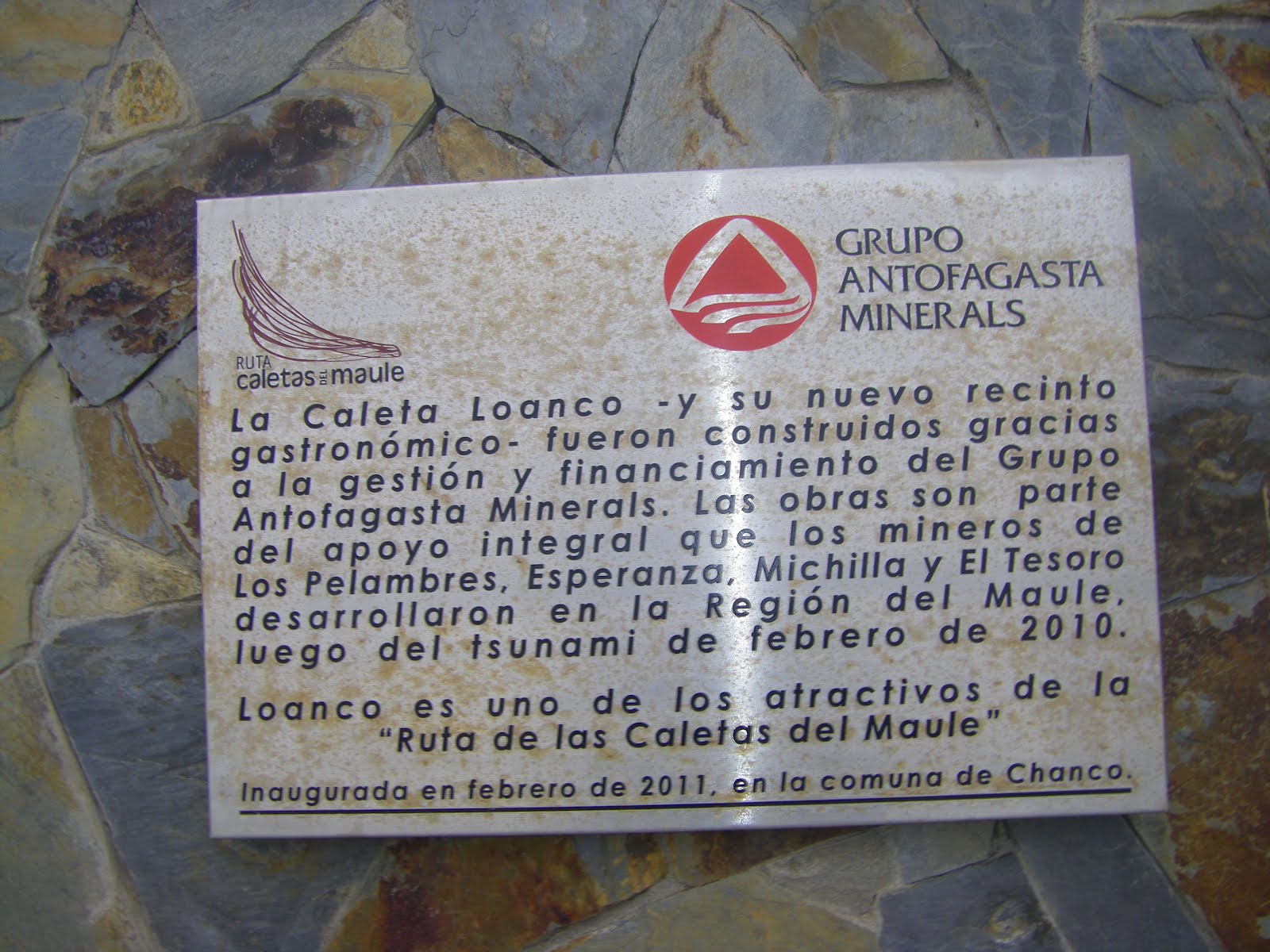
“The New Coastal Panorama of Maule", reads the title of the article in El Mercurio’s Vivienda Y Decoración magazine section that greeted us the day we arrived in Chile. Beautiful pictures of architecturally interesting buildings situated right at water’s edge in the small fishing villages of Boyeruca, Duao, Pellines, Pelluhue, Curanipe and Loanco proudly provided visual testimony of the near completion of this Ruta del Mar project. This is a notable example of one group of Chileans (Grupo Antofagasta Minerals) helping their artisan fishing brothers and sisters recover from the tsunami of February 27, 2010.
The idea was to create a series of structures in the fishing villages that would combine modern and traditional design while providing services to attract tourists and space for the artisan fishermen to store their fishing equipment and carry out the chores of cleaning and marketing their catch. I must admit to having been skeptical when this program was announced over a year ago. It just seemed too innovative, even transformational for these poorest of Chilean villages. So when I saw the pictures in this flashy, mostly “good news” magazine, all so very attractive, I felt a surge of optimism. But upon closer scrutiny of the pictures and the story, I got a different feeling, that things were not yet going as expected.

So, just a week after arriving in Chile, we set off to ill-fated Maule again to observe the earthquake/tsunami recovery process first hand. This time Ximena went along, to visit Ximena’s sister Veronica and her husband Joaquin at their home that overlooks the Pacific Ocean, with El Faro Carranza in view to the north, and my adopted fishing village of Loanco to the south. The Pan American highway, as it heads south from Santiago, cuts straight through beautiful vineyards and orchards, through the central valley towns of Rancagua, San Fernando, Curico, and then Talca. The Rio Claro flows from the Andes to the Pacific Ocean, crossing the highway just south of Talca. The tall two-lane bridge over the Rio Claro became an icon when it was totally destroyed in the 2010 earthquake. For the past two years, the rebuilding of this bridge has had the effect of a tourniquet tied tightly around this north-south transportation artery that runs the entire length of Chile, producing traffic backups and long delays. We passed alongside the collapsed bridge, on a temporary structure, recalling the enormity of the damage caused to Chile’s infrastructure in the 2010 earthquake. But, this is the last of the major road and bridge repairs required along the Pan American highway. Traffic is moving much more smoothly now, and the reconstruction of this 125 meter-long bridge is scheduled to be completed by the end of 2012. They claim this one is antiseismic. Let’s hope so.

Just past the Rio Claro we turned west off the highway and took the road that winds through first agriculture and then forested land as it crosses the coastal range and decends into Constitucion, one of the towns most affected by the earthquake and tsunami. Constitucion is still cleaning up the rubble and trying to rebuild. The Celco pulp mill, initially closed due to water damage from the tsunami, is clearly working, belching characteristically ugly, odorous smoke into the clear coastal air, but people are back to work. Rebuilding Constitution is surely one of the greatest challenges the Chileans face. Terribly convoluted issues of sorting out land ownership, approval and application of new building standards, establishing procedures to provide subsidized funding for homes and businesses, all take seemingly endless weeks and months to work out. The area along the river, totally destroyed two years ago is still awaiting resolution of these issues, showing little progress to date. If I were to suggest it would take 8 to 10 years to get Constitucion back on its feet I could be accused of being overly optimistic.

In the face of this challenge, though, there is one encouraging story to be told: the rebirth of “Cabanas Playa El Cable”. Three kilometers down the narrow road that runs south along the coast from the beach area of Constitucion to a fishing pier originally built to service the Celco mill, is where Guillermo and Javiera lost their home and their tourist business (cabins and restaurant) to the tsunami. Their story has been told in part in earlier postings on this blog (See April 26, 2011 posting ). We decided to pay them a visit, before going on to “El Faro”, to see how they were progressing with their rebuilding, and if feasible, arrange to stay overnight the next Sunday on our way back to Santiago.

When we drove down to the parking area, Guillermo and Javiera dropped what they were doing and rushed to great us. Proudly pointing out the now 20 cabins finished and ready for occupancy, the pool area already being used, and the attractive two-story restaurant, they assured us we would have a cabin to stay in Sunday evening, the restaurant would be open for dinner, and they would tell us all about how they were doing.

So, we moved on down the coast, almost jubilant from having seen Guillermo and Javiera so excited about the progress they have made. We bought several merluza filets at a roadside stand and drove to Veronica and Joaquin’s home, called “El Faro”. We unloaded our bags from the car, and immediately joined Marira and George (Veronica and Joaquin’s daughter and Scotch/Chilean husband), who had prepared slices of mild Chanco cheese, spicy salame, and pisco sours for the “El Faro happy Hour”. We sat on the porch and marveled at how pacific the Pacific Ocean was, not a normal condition, and how low the water was around the long rib of rocks protruding into the ocean from the shore near where the Carranza lighthouse is. This group of rocks is inhabited by hundreds of sea lions (called “lobos” locally), and this afternoon, without the normal high winds and rough surf, the lions produced a din so loud (and an occasional whiff of guano so strong) they seemed to be right next to us.

With the dust from our journey from Santiago finally washed from our throats, we drove to the small fishing village of Loanco, to meet Veronica and Joaquin for dinner at another “adopted” place, Restaurante Las Rocas, the rebuilt seaside restaurant owned by Maria and Dago (also the subject of earlier postings in this blog). As we drove down the hill into town, a weird feeling hit me. I knew why immediately, but I didn’t say anything. I was trying to rationalize what I was seeing, but to no avail. There were no boats in Loanco!
No boats, no tractor to pull them out of the water, no flocks of seagulls picking over piles of discarded fish, no dogs running around, no refrigerated trucks loading fish, and most noteworthy..no fishermen. I was shocked to say the least. But not too shocked to have a nice dinner of abalone (“locos”)fried merluza and corvina, and a generous amount of Misiones de Rengo sauvignon blanc


Incredible as it may sound, the artisan fishermen of Loanco, with their new boats and motors made possible by donations received after the tsunami destroyed everything they had, have decided to move their boats out of Loanco, 7 kilometers up the coast, to a spot they claim is more appropriate for launching and landing their boats. No matter, apparently, that the new Ruta del Mar installation has now been finished and is ready to be put into operation. So, Loanco's shores are desolate, and the new restaurant, equipment storage and fish processing facility stands vacant. Unbelievable, but true.


The next day, Ximena and I checked out the new Ruta del Mar facility at Pellines, just a few kilometers up the road from Loanco, also featured in the El Mercurio V&D magazine. .
Here also, the new facility is finished, but closed. Reason? Paperwork for operating the restaurant has not been finalized. So, in the middle of summer, the tourist season, this establishment also just sits and waits for someone to do something. The fate of these much acclaimed facilites in Loanco and Pellines remains uncertain, but while an optimist would suggest everything will eventually work out, I am of the mind that a lot of thought went into the design of the "Ruta del Mar" facilities, but far too little attention to the business and implementation side of the project. It seems like these facilities were just turned over to a group of fishermen and their families with little concern for who would be in charge and how they would operate the business. We


returned to Constitucion to spend the night at Guillermo and Javiera's lovely seaside cabins. Over cold pisco sours, pastel de jaiva,(crabmeat pie) grilled reineta, and some Concha y Toro Sauvinon blanc Reserva, we talked about how they were able to rebuild their business. It seems that their location so close to the sea prohibits insurance that is required for normal business bank loans, so they have had to scratch for capital. But little by little, they are making it. The night we were there the cabins were mostly occupied. They want to hook into tourism agencies with US and European clients, but so far are benefiting mostly from word of mouth to market their place. Soon they will build their new home up on a bluff above the cabins alongside the road. The old one was wiped out by the tsunami, and the new restaurant has been built on that site. It's not easy for Guillermo and Javiera, and it is not clear that they will be able to capture a reliable flow of guests to continue to improve and expand their business, but the energy and persistence with which they are going forward, with very little help from official relief programs, is encouraging.

So there you have it; three post-tsunami projects: Restaurante Las Rocas, Cabanas Playa El Cable and Ruta del Mar. Two moving ahead through the perseverance and hard work of committed entrepreneurs, Maria and Dago, Guillermo and Javiera, and the other stalled due in part to uncertain management responsibilities and capabilities, and ineffective involvement of local public sector agencies and bureaucratic lethargy. After an event like the Chilean tsunami, it is not easy to get businesses back operating and people back to work. But it is essential. Small businesses are the lifeblood of towns like Loanco, Pellines, Chanco, and Constitucion. To get them going again requires access to capital and temporary relief from taxes on small business. Support from government to decrease regulatory hurdles helps, but as these three cases prove, finding your own source of capital and simply moving ahead with the rebuilding process without waiting for public or private assistance seems to work best. In fact that is what Guillermo says he suggests to his small business friends.."just get going! Don't wait for help. If it comes, all the better. But don't wait for it."


Posted on February 5, 2012, in Santiago, Chile

Saturday, February 4, 2012

Reading the Tees in Haiti

Before last week, I had been in Haiti twice, each time as a development officer working for USAID. Once I went to visit the agriculture development program, run at the time by my friend Vince, and another time to sort out a food aid problem. During both visits I saw a lot of Haiti, and each time marveled at how utterly desperate and intimidating the urban centers were, but how orderly and welcoming the countryside was. Years of political chaos, civil unrest, and natural disasters have left Haiti a relative anomaly in the western hemisphere…dirt poor and seemingly going nowhere. Donor countries like the US keep pouring money into Haiti, a country that for most of the time since Baby Doc Duvalier left in 1987 has been poorly governed and seemingly working hard to stay poor. Most Haitians were used to being poor even back during the Duvalier years, but life is even more difficult because general insecurity has grown in the absence of the oppressive control of the Duvaliers.

So in January of 2010, when a devastating 7.0 earthquake hit the island of Hispaniola, with special fury on the swarming city of Port au Prince, those who thought the situation couldn’t be worse for millions of Haitians in abject poverty were proven sadly wrong. In a country of over ten million people (over two million Haitians live outside of the country, mostly in the US and Dominican Republic), at least 300,000 homes were destroyed leaving over 1.5 million homeless. Port au Prince was shaken to the ground, the beautiful shining white presidential palace, the stately national cathedral,


and the historic national assembly, all in the center of town, reduced to Roman-like ruins. (Note: Chile’s earthquake that occurred just a few weeks after the Haiti quake was stronger (8.8), but the damage was so much greater in Haiti. I have reported on the Chile quake in several early postings on this blog, but resist making comparisons due to the stark differences in the conditions in the two countries.) In the first few months after the quake, frightened and searching for a place to stay with friends or family, at least 600,000 Haitians who inhabited the capital city left for the countryside and other cities. Hundreds of public and private relief agencies rushed into the country to fill the vacuum of an inoperative government that was incapable of responding to such a large tragedy. They set up at least ten huge tent cities inside of Port au Prince and some outside..


After a couple of months, as the people saw activity and opportunity begin to pick up in Port au Prince mainly due to the resources brought in by the relief agencies, many of the same refugees who had left Port au Prince came back into the city in search of food, medicines, water, shelter, and work that was more available in the capital than outside. And until now this trend has continued, with possibly as many as 2.5 million people in and around the city where it normally, before the quake and before the flood of “relief assistance”, had only 1.5 million inhabitants

Earlier, in 2004, the United Nations sent a peace keeping multinational force to Haiti to help control civil unrest. These forces have been playing an important role in post-earthquake Haiti, positive and negative, the latter highlighted by an outbreak of cholera apparently brought to Haiti and spread by one group of peacekeepers. But now, eight years after these forces arrived in Haiti, and two years after the quake, Haitians and many others believe the political situation now requires that these forces be withdrawn, or at least redeployed in less visible roles. On May 14, 2011, fair and open elections were held and a new President of Haiti installed. He had campaigned on a platform that included a categorical commitment to move the people still in temporary housing in the city to a new, better location. In fact, as many as 700,000 homeless have been settled on barren hillsides just outside of the city, beyond the international airport, but unfortunately this was carried out too spontaneously, before any services like roads, water, sewage removal and electricity could be arranged. And in a perverse example of human nature, people who had been living outside of Port au Prince, seeing a chance to obtain a better situation for themselves, apparently are moving temporarily into the city so they can qualify for the land and shelter being offered in the resettlement program. On top of this unplanned incentive to people to move into Port au Prince instead of out, the word on the “street” is that the northern part of Haiti is now due for a strong earthquake, so people who believe this are heading to Port au Prince, since that quake has already happened!

According to Benito, a very knowledgeable Haitian who accompanied me while I was in Haiti, the effects of the 2010 earthquake were so widespread there was some hope, generalized in the population, that the earthquake would provide a transformational wakeup call to Haitians. The Dominicans, who share the island with Haiti, were exceptionally good neighbors doing all they could to facilitate the delivery of relief supplies immediately after the quake and receiving a large number of Haitian refugees. At least two million Haitians move back and forth between Haiti and the Dominican Republic (a country of only Eight million), providing a source of cheap labor but also putting pressure on services in that country.

Many other countries, the entire world, really, came to Haiti’s rescue, so many that some thought they might finally move forward in recovery, together. Ex US Presidents Bill Clinton and George W. Bush joined together to lead a multi-donor effort to rebuild Haiti. The new president of Haiti put forward a clear challenge to the Haitian people: “Let’s do things differently”, an attractive proposal for a population of very discouraged and defeated people, but a people who had some reason to believe that things could begin to improve even from this post-earthquake rock bottom situation.

So, as I waited in the Miami international airport last Monday morning for my plane to Haiti, wondering about the week I was to spend looking at some development projects in the northern part of the country, a group of about 25 to 30 Americans dressed in bright yellow Tee shirts came into the waiting area. .
This evangelical army reminded me that for years non-profit philanthropic and religious missionary groups have pretty much provided the services to the Haitian people that in most other countries are provided by the government, keeping Haiti from slipping even deeper into extreme poverty. This group of yellow shirts was headed to Haiti for about a week to build a school and a health clinic. I have a feeling at least one of these groups is on every plane that flies from Miami to Haiti. I don’t know if this group built the clinic or the school, since I never saw any of them again while I was in Haiti. But as I travelled around Cap Haitien and between that northern city and Port au Prince, I saw signs of every relief, development, and humanitarian agency that exists running up and down Haiti’s terrible secondary roads in new and not-so-new jeeps, and eating in local restaurants catering to foreigners with considerably more money than most Haitians.

I was in Haiti to visit small farmers who are receiving technical assistance and training from US farmers and technicians under a USAID-funded program named “Farmer-to-Farmer”. All of these folks are extremely poor, but they are engaged in bee keeping for honey production, rabbit raising for food, and vegetable gardening to provide more nutritious meals for their families and communities. >>
With my work done on schedule by Friday morning, I arrived very early for my flight back to Chile via Miami and sat pretty much alone in the airport waiting room in Port au Prince. I was taking advantage of the peace and quiet of the moment, trying to sort out my feelings about the likelihood that maybe this time Haiti will, in fact “…do things differently” as the new President has proclaimed. My thinking was interrupted first by a group of 40 or so tired but happy “blue shirts”… "JIHM, Jesus in Haiti Ministries, Bringing the love of Jesus to Haiti”, who seemed to fill the room as they sang happy birthday to Heather, the youngest of the group, who was from somewhere in Minnesota. As soon as they settled in to wait for the plane, another group came into the hall; younger than the “blues”, they were wearing a different shade of blue Tee shirt that said “Run for Haiti; Haiti, Set, Go! 5th Fun Run for Jesus in Haiti Ministries.” Following right on their heels were six brown-shirts, who were “Making a Difference, One life at a Time”. And, about ten Light blue Tees joined, asking “Why Haiti? Why now? 400,000 reasons!! Maybe because it was Friday there were so many of these groups travelling back home, but for whatever reason, they kept coming. A group from Foothills Church, who declared on their beige shirts “I love You”. I sat for a few minutes with David from this last group from Ashville, North Carolina. David is 17, and spent eight days in Haiti helping in a very rural health clinic by handing out medicines for the doctors in the group. He would come back next year if he could. After all, he said, “I am able to, and they need help.” To David it was simple. There is a need, you help. God’s work.

It’s tempting to believe that with the obvious needs in Haiti, and all the good will being sent to Haiti by hundreds of individuals, agencies, and governments, that a well-meaning new president might begin to put Haiti on a track towards more stability and more development. In one of the last conversations I had with Benito before leaving Port au Prince, he admitted that he had been optimistic about Haiti, and that is why he was still living there with his family of four. With his education, skills and connections, he surely could find work outside of Haiti. However, he was beginning to have doubts that this time was going to be any different. The efforts of the President to get children back in school after the earthquake was laudable and his application of new taxes on business transactions are thought to be positive. But his excessive populist holiday gift giving while public employees go unpaid for weeks smacks too much of the past. He even gets the feeling some of the same people who ran Haiti in the 80s are being brought back into the government. Things may be falling apart again. If they are, it will be very hard to keep any educated Haitian in Haiti, and without the most educated Haitians, no Haitian institutions can be built and sustained, and any hope of progress will again be thwarted.

So, how do I come out on this one? The yellow, dark blue, regular blue, light blue, beige, and brown Tee shirts may have the right message for Haiti this time. How can all that love and optimism be wrong? But I can’t seem to get out of my mind the black shirt I saw while having breakfast the last day I was in Haiti. It was being worn by a young man carrying boxes of food from a truck to the restaurant storeroom. In blaring white letters, it said:
“Same Shirt, Different Day.”


Posted on February 5, 2012, in Santiago, Chile

Thursday, January 19, 2012

HOME AGAIN

HOME AGAIN

Our annual arrival at Chile’s main international airport in Pudahuel, on the outskirts of Santiago, after all these years has become pretty routine. The efficient document revision in the immigration hall, purchase of two large bottles of single malt scotch in the duty free shop, the chaotic scramble for luggage, the onerous check for plant and animal material in the customs lines (Chileans are rightfully concerned that introduced pests not be released into their economically important but ecologically vulnerable fruit orchards and vineyards), and then out into the mass of expectant friends and relatives. Ximena’s uncle Miguel awaits at the edge of this crowd, having driven our car to the airport to retrieve us and our luggage for the 20 minute ride to our apartment in the relatively central, residential neighborhood of Providencia. There is something very special about the morning air in the Chilean central valley that never fails to confirm that we have finally reached our destination more than 20 hours after departing cold, cloudy Leesburg, Virginia. That all so welcoming combination of dry country air laced with diesel exhaust and whiffs of the Mapocho River can mean only one thing. Ahhh….Home again!

I am reminded how predictable life is in Chile…except for the earthquakes, of course, that they still have not figured out how to predict. Well, actually, they know that every couple of days there will be a tremor, and once or twice a month a fairly good shaking. We wonder when we will feel the first one. Miguel has warmed up some cheese empanadas for us, so we have them for lunch. Right away, though, we must get out in the bustling Santiago streets to begin the tasks required to get settled into our apartment (this time for a welcome three months) while staying connected to the outside world. First stop is the cell phone offices of Intel PCS to activate our Chilean phones. Modern offices employing an army of young, attentive, smiling technicians and salespeople work their magic to reactivate my phone that had been dormant for 9 months and change Ximena’s phone plan to a more “economical” one. “No problem” and a warm smile accompany every question we have, and we soon depart with firm assurances that our phones will start operating within the hour. Next, to the cable and internet people at VTR, to arrange for those connections we now find we cannot live without. No long wait, just some paperwork, and an appointment for the service to be connected in our apartment the following day, a Saturday. I am tempted to think that the amazingly prompt service for these essentials here in Chile is due to the fact that they have real people available in efficient offices, who deal with you face to face. So, by the end of the first day, we had everything arranged. (A note: our internet and cable connections were done as promised the next day, but it was three days, many phone calls, and the purchase of another phone before the smiling, “no problem” folks at Intel PCS were able to get me connected. I am tempted to think that the problems we encountered getting the phone connected is due to the fact that they have real people dealing with…..!)

Next, a quick trip to the Jumbo supermarket to pick up the essentials for our first day or two: a couple of bottles of Sauvignon blanc, a bottle of Artesanos de Cochiguaz pisco, some small de Pica lemons (you can see where this is leading), some fresh bead (those flat tasty hallullas), a couple of bottles of sparkling Cachantun mineral water , a chunk of Chanco cheese, a whole salami, and a couple of nice red tomatoes, the kind that actually smell like tomatoes. The Jumbo supermarket is a worthy destination in its own right due to the fantastic array of fresh and prepared foods Chile is so efficient at producing, packaging, and marketing. A stop is always required at the little raw seafood bar located right in the middle of everything, where ceviche made from fresh Chilean corvina and individual portions of raw clams, mussels, and snails are served up with lots of lemon, cilantro or parsley, and cold white wine, mostly to men waiting for their spouses to shop.

Finally back home, exhausted, I settle in for a glass of cold white wine (Correct! Another glass of cold white wine) and a chance to peruse the local newspaper to see what is going on. I have come to believe that one of the reasons I so enjoy the time I spend in Chile, away from the US, is that the political discourse here, especially recently, seems so different. Or maybe it is that I can observe the Chilean show with a bit more distance than I can in the US. Whatever, I seem to be less cynical about things here, even optimistic sometimes.

To get a good feel for the issues of the day, and to begin to catch up on some of my favorite themes (earthquake reconstruction, seafood, wines), I read completely through a copy of La Tercera which Miguel has left for me, El Mercurio which I purchased at the Jumbo, and La Segunda which I bought from a street vendor on my way back to the apartment from the Jumbo. I have always preferred to read the morning newspaper, El Mercurio, although all through the early years of my involvement with Chile my leftist friends would chastise my choice because El Mercurio is owned by one of the most conservative families in Chile and because “El Mercurio miente!!” (An accusation that the newspaper was filled with lies, which appeared on the public walls of Santiago all through the 1960s and 70s). I read El Mercurio for many reasons, one of which is NOT agreement with their editorial inclination. Miguel tries to convince me to read La Tercera, claiming it is better, but I read that one only when he gives me his. Then in the afternoon I will often read La Segunda, a more sensationalist, simpler exposure of the major events of the day that the morning papers were too early to include. I have never figured out why La Tercera (“the third”) comes out every day before La Segunda (“the Second”), but nobody else seems to be concerned about that.

So, what’s going on in Chile, in this second week of the New Year 2012?
The political scene is captured by intentions to reform the educational, electoral, and tax systems. In education the issues that attract attention are whether or not to permit a “for profit” segment of the sector, how to finance the public institutions, what to do with the municipal-managed primary and secondary schools, and how to certify the quality of private educational institutions, among other issues. What is really at play, it seems to me, is how to provide the type of education needed at all levels to take Chile to the next level of development. Education issues bring Chilean students into the streets regularly, and this past year was full of student marches, school takeovers, and strikes. Education sector reform projects abound, but for now, everyone is on vacatiion.

Chile elects its Executive and Legislative leaders through a “bi-nominal” system. This is a system which since it was adopted during the Pinochet era, has limited the expansion of political parties and frustrated the ability of smaller political entities to compete for a place at the table. The system has some positive attributes, like producing political stability as long as everyone goes along with the system. To the extent that this limits participation, most analysts agree the system is not very democratic. At first blush, it appears many, but not all, want the system changed.

Tax reform is on the table. Does Chile need to collect more taxes or does the collection have to be done in a more equitable way? This may sound very similar to what is going on in the US, but there seems to be one big difference. There is not a clamor amongst the political class, right or left, to drastically reduce taxes. Not that Chileans like to pay taxes, and they are as adept at avoiding them as anyone else, but they do seem to ascribe to the idea that there are many services society needs from its government. Of course they want an efficient and less corrupt public sector, but they seem to want a public sector.

On all these issues, the President and the opposition are in a much more civil discussion about options than is the case in the US. The governing and opposition parties in Chile appear to me to be striving to reach compromises (at least on the surface); what a difference from the US where compromise is seen as failure. In the context of this discussion, ex-president of Chile Ricardo Lagos, passing through Santiago recently as he promotes his new book “Southern Tiger: Chile’s Fight for a Peaceful and Democratic future”, publicly challenged a more conservative politician to think seriously about what kind of country Chile should be, “…one like Japan or Scandinavia, or one like the United States or Portugal that have the worst distribution of income and the worst social indicators…?” Listen up, Gringos.

Chile’s position as a new member of the group of “developed” countries, the OECD, has created an interesting shift in perspective as to how Chileans and others see Chile and measure its successes. Before entering the OECD in 2010, Chile was measured and graded as a member of the “underdeveloped” world, and its recent economic, social, and political accomplishments led to Chile being very favorably compared to the rest of that group of “poor” countries, especially their Latin American neighbors, placing near the top on most lists of important economic and social indicators. But now, Chile is more often compared to the other OECD countries, so is often at the lower end of the group. This is forcing a change in the attitude of how Chile and Chileans feel about themselves. Rather than being considered on the top of the heap, they are now more often appearing towards the bottom, but of a much more developed group of countries. This is not bad. Regularly, comparisons appear in the press, and Chileans who believe they are doing very well are forced to reconsider in some cases. At the same time, comparisons with the most developed countries also show Chileans the areas where they have really done well on a global basis, and where they have much more work to do. To this point, my first reading of issues reveals mostly good news, that the World Bank projects Chile’s economy to grow around 4% in 2012 (compare that to US and EU realities) and that the country has US$ 60 billion in reserves to confront any liquidity problems that might arise during 2012 (not bad for a GNP of $US 220 billion).

Chile’s success over the past several decades in creating an “emerging economy”, and its entry into the OECD group has resulted in the country becoming more important in global and hemispheric activities. Chile increasingly attracts a high number of important visitors to Santiago. On just the first day of our visit, the newspapers announced high-level visits by the US Secretary of the Navy who declared that “The US and Chile will work together as partners in the Pacific arena”, The Director of the US National Science Foundation who visited the astronomical installations in the north of Chile and characterized Chile as a “strategic partner” of the US, and Nobel prize winner in economics from the US, Thomas Sargent, in Chile on KPMG’s nickel to meet with President Pinera and present several public speeches on macroeconomics.

But while Chile receives, it also gives. Chileans present in high levels internationally are watched closely by the local press. Rumors are flying that past President of Chile Michelle Bachelet might be planning a run at the Secretary General of the UN position when it becomes vacant in 2017. From her position as head of the UN Women organization in New York, she is operating on The Big Stage, where her accomplishments and those of Chile over the recent past are visible and quite highly appreciated.

Chile is very dependent on its natural resources, starting with the mineral riches (copper and molybdenum, the sale of which keeps the US$ to Chilean Peso exchange rate much too low for my wishes), but also agriculture, fisheries, hydrological and forestry resources throughout the 4,300 kilometer length of the country. On this subject, the newspaper brings some bad news. A recent spate of forest fires affected more than 16,000 hectares in the area of the unique Torres del Paine National Park and several private properties throughout the Araucania region. All seem to have been caused by humans, the prior accidental but the latter possibly intentional, causing an increase in the temperature around the issues of Mapuche dissatisfaction and violence in the region. But there is also some good news in today’s paper. The “erizo rojo” (a sea urchin historically part of the Chilean diet and seafood export trade) will be repopulated in 10 bays in the 4th region. A new 24,000 hectare Coastal Alerce National Park, to be inaugurated before the end of January 2012, will attempt to protect important endangered plant and animal species like the alerce (Fitzroya cupressoides), a type of redwood, and the pudu, a small Chilean deer.

One of my main interests over the past two years, since being an unintentional witness at the epicenter of the February 27, 2010, earthquake and tsunami,(please look back at the postings in this blog in 2010) is the reconstruction of the areas affected by this terrible natural disaster. So I scour the Santiago papers for news and stories that reveal the state of play. An important data point in tracking the progress being made at this point two years out from the event is the provision of new (not temporary) homes. The target set by the Pinera administration was to build or repair 220,000 homes by 2014. At the end of 2012, around 70,000 were finished. Having now reached the level of about 4,000 homes built or repaired per month, special efforts must be made to speed up the approval and delivery of subsidies.

One project I have been watching is close to termination, and I must admit to having been quite skeptical a year ago about its viability. When the tsunami wiped out several fishing villages along the coast of central Chile in the Maule Province, Antofagasta Mining, located in northern Chile well away from the affected area, in an expression of solidarity to their brother fishermen contracted with the Office of Architects to design and build new installations in several of these villages, to help the fishermen return to their livelihood. Much to my surprise, and great pleasure, El Mercurio reported the day we arrived (How did they know I would be wondering especially about this project?) that the new community buildings designed for six fishing villages in the Maule Province most affected by the Tsunami two years ago is nearing completion. I had seen the one in Loanco nearing completion early last year and reported on it in an earlier posting on this blog, but this El Mercurio report mentioned the creation of a Fishing Village Route tourists can now enjoy (Ruta de las Caletas) . So, as soon as my reliable travelling companion Flick gets to Chile in February, we will add the Ruta de las Caletas to the various Rutas del vino and the Ruta Forestal to our list of ways to see Chile, and check them out. Fortunately for us, geographically they almost overlap. But exploring these "rutas" is not an easy task; each requires a certain amount of unique preparation and appropriate frame of mind to fully enjoy.

Oh yes, I almost forgot. El Mercurio also reported this week that US beef is on sale at the main supermarkets of Chile now, with short ribs selling for about $US 4.00 per pound, and there is a new Peruvian restaurant in Santiago attracting a lot of attention, named “Del Carajo!”

I will start tomorrow to gather more details about all these topics so I can pass them on to you. I believe I will start with “Del Carajo”, and go from there (chances are in 3 months’ time I will end up somewhere with the same name).

Posted on January 19, 2012, in Santiago, Chile

Tuesday, December 27, 2011

CHILE 2012

Dear friends and loyal followers,
It took me quite awhile to recover from the Peace Corps reunion in Washington on September 24, the subject of my last posting on this blog. But we are about to head south to Santiago again, on January 12, for a nice long stay of three months. I have gone back through all my prior postings, and find that I have promised to follow up on several interesting themes, but have yet to do so; like oysters, mussels, earthquake recovery, some special wines we have heard about and want to try, and of course the continual search for old friends, colleagues, and haunts from when I was with the Peace Corps in Chile.

In the runup to the reunion on September 24, I received many interesting letters from others who spent time in Chile, with stories that deserve some research to determine at least approximate veracity, but also an update on circumstances around the people and places those stories relate. Peace Corps volunteers Larry Rector, Tom Scanlon, and Brian Loveman have written books about Chile over the years since their Peace Corps service, and I would like to visit their sites and see what they are like now, compared to what we hear about them as long as 45 years ago; especially Trovolhue where Brian and his wife helped a town move their village to higher ground to avoid annual flood waters from the river, and the area in the Araucania region of southern Chile where Tom wrote his letters home that served as the basis for his book "Waiting for the Snow".

Also, Jim Dungan, who now lives in the Temuco area on his farm, wrote me a very long description of how he, when he was a Peace Corps Volunteer, was pretty much responsible for introducing Radiata pine to Chile. Since this introduced species has become the basis for a very successful forest industry sector in Chile (and the target of the environmentalists ire for contributing to the "sterilization" of the Chilean countryside), I would like to get Jimmy D. around a bottle of Chilean tinto and delve deeper into the true story of how this tree came to Chile.

And speaking of introduced species in Chile, we have made much of the role the US Peace Corps played in the introduction of salmon, as class of fish that has also, along with Radiata pine, resulted in incredible economic growth of an export product and a whole leading sector of the Chilean economy. But, some of the stories are short on details, so even though I have promoted the positive aspects of what has gone on in Chile with the introduciton of salmon, I would like to spend time visiting with long-time Peace Corps marine biologist counterparts I knew several years ago in Chilean Universities, like Alfredo Cea and Juan Carlos Castilla, if I can find them.

It seems there was one Peace Corps Volunteer in Valdivia who became a member of the community band that played in the town square every weekend. He is remembered not only as a friendly "gringo" who wanted to be part of his town, but also for the instruments he brought from the US and donated to the group. Just before the September reunion, we received a note from one of the band members, remembering fondly the Volunteer who lived up to the best people-to-people dimension of the Peace Corps. I would like to share a pitcher of iced white wine with peaches, clery, with this old Valdiviano and get a bit more flavor of the town band.

The last time I left Chile, I sat next to a New Zealander who has lived in southern Chiloe, near Castro, where he raises oysters, clams and mussels. He invited me to visit him and see how his operation has grown and how he is trying to raise these bivalves in an environmentally sustainable way. This visit is high on my list for this trip to Chile, if for no other reason than that I was so impressed with the New Zealander green lipped mussels when I visited that country for my Godson Joaco's wedding, that I am sure this guy can do wonders with Chile's best mollusks.

So, you have been forewarned....there will be much more coming. But I want to try something new this year. I am acceding to the oft-repeated suggestion that my postings are to long, and have decided to try to post more frequently, but shorter pieces. We shall see how that goes.
Until then, Happy New Year. I hope to see all of you in 2012, but if not, at least an occasional exchange of views and high thoughts.

Un gran abrazo,
Dave

Posted in Panama City, Panama on December 28, 2011

Saturday, October 1, 2011

CELEBRATING 50 YEARS OF PEACE CORPS

Saturday, September 24, 2011 was a great day for those of us who served in the Peace Corps in Chile. Under a threatening sky, over 220 returned Volunteers from throughout the country gathered at the invitation of the Embassy of Chile, to celebrate the 50th anniversary of the Peace Corps and our lasting relationship with the fine people of Chile.

At about 1 PM, in the patio and courtyard of the Museum of American Art in downtown Washington, DC, just a couple of blocks from the White House and behind the majestic building of the Organization of American States, two tents were finally raised in place to shelter our group from forecasted inclement weather that, fortunately, did not materialize.

An impressive display of posters with pictures and stories of Peace Corps Volunteer activities throughout the years welcomed the participants as they streamed in, young and old alike. There were 70 year olds from the first groups to arrive in Chile in 1961, and 30 year olds who served in the last group that left Chile in 1998. Each Volunteer who attended was given a copy of the freshly edited publication “The Peace Corps in Chile; 1961-1998”, soon to be available online on the National Peace Corps Association website.


True to form, the menu began with classic empanadas washed down with rich Chilean red and chilled white wine and accompanied by recordings of those old Chilean tonadas sung by the Huasos Quincheros. About an hour into the reunion, as more Volunteers showed up and the reencounters after many years of separation began to create a happy din, Peter Walsh, a Volunteer who served in Valdivia in 1964, played the National Anthems of Chile and the United States on his accordion as the groups sang along. The Chileans present were duly impressed that so many gringos actually knew the words to their national song.

It was a wonderful afternoon of meeting and greeting people we knew and worked with many years ago, some of whom we had not seen since leaving Chile. We had great fun sharing memories again with Volunteers from our PC Chile group, including Ron Bodinson, John Hager and Blanca, Carl Gallegos and Brenda, Jerry Dillehay, Ron Billings and Carmen, Lee Baker and Suzie, Millie Wetterberg, Kerry Mills and Pete, and Willie Goldsmith.

It was also a great pleasure to reunite after many years with Volunteers who served, and whom I became close to, when I was on the staff of the Chile Peace Crops program from 1976-79: Connie Mohlis, who helped develop the chinchilla reserve near Salamanca in northern Chile, Sean Keagan who served in a farmers coop in Hijuelas north of Santiago, Raoul Gagne and Paul Randolph who were professional natural resource specialists working to better manage Chile’s water and forest resources, Christine MacNaughton who was one of Augusta Crino's star Volunteers in the rural health program, Gary and Elaine Gepford who contributed modern approaches to physical education training and of course Linda and Floyd Thompson who contributed so much to the design of visitor facilities and environmental education programs in national parks.


A Chilean buffet was set up, featuring ceviche, pastel de choclo, chicken and beef pinchos, and several salads including ensalada Chilena. As the dessert of fruit mousse and fresh fruit was served, the speeches began.

First, Joe Keyerleber greeted the Volunteers on behalf of the first group of Volunteers who went to Chile in 1961. He reminded everyone of what it was like to be the first to join up for something as novel and exciting as the Peace Corps. And, he read a greeting from Father Theodore Hesburgh, who was intimately involved in training and supporting those first Volunteers to go to Chile, and who continues to meet annually with these Volunteers in spite of his advanced age and delicate health. Hesburgh’s greeting ended with a very personal message to the Volunteers:

“Each and every one of you has a personal story to tell about your time in Chile. You helped Chile grow, and at the same time your experience led to your personal growth and that of our nation. Because of you and your service in the Peace Corps, we are a society more aware and sensitive to the broader world around us, and this contributes to world peace. Thank you for your service in the Peace Corps. Don’t ever forget why you went, and always cherish and share what you brought back with you.”

Representing the last group of Volunteers to serve in Chile, Christina Machion Quilaqueo spoke about the many cultural and personal links Volunteers maintain with Chile and Chileans well past the end of their Peace Corps service. She married a Chilean and like so many others, has a child who is bilingual and bicultural, “…where celebrating Dieciocho is just as routine as celebrating the 4th of July; where eating empanadas is a ordinary as having a burger; and where hopping on a few planes to vacation with abuelita and tata is way more fun than going to the Jersey shore.” She ended her greeting citing Ambassador John O’Leary who, in 1998 while talking to the Peace Corps staff in Santiago said:

“The US can be proud of what the Peace Corps has contributed to Chile, but none of it would have been possible if Chileans did not open your arms and your homes to welcome these North American Volunteers. The marvel of the Peace Corps experience worldwide is that Volunteers return to the United States saying they will never be able to repay what they received, and the citizens of countries where Volunteers served say they will never forget what the Volunteers contributed to their country. The Peace Corps has helped broaden the United States’ view of the world, and I trust the Volunteers have given Chile a better understanding of the United States.”

Christina ended by addressing directly the Ambassador of Chile: “On behalf of all the Peace Corps Volunteers that have served in Chile, I would like to express our heartfelt gratitude through you, Mr. Ambassador, to all the Chilean people that we worked, lived, and shared so much with us while we served as Volunteers in your beautiful country, our adopted home.”

Representing the State Department, Jason Vorderstrasse, Chile Desk Officer, read a greeting from the Department, which included another quote from Ambassador O’Leary, who said in 1998 in Santiago: “The best friends that Chile has in the United States are the 2,500 Peace Corps Volunteers who served in Chile, who proudly tell all who will listen, “I worked for the Peace Corps in Chile”.

The Chilean Ambassador, Arturo Fermandois, then congratulated the 220 returned Peace Corps Volunteers who had come to Washington to celebrate the 50th Anniversary of the Peace Corps. He noted that between 1961 and 1998, over 2,500 Volunteers had served in Chile, an impressive number to be sure, and that for so many to come together for this reunion was a testimony to the commitment Volunteers feel for the Peace Corps and the country in which they served, in this case, Chile.

Fermandois stated that over the past 50 years, since the first Peace Corps Volunteers arrived in Chile, great advances had taken place in the Chilean economy, and he recognized that Volunteers had made significant contributions in many of those sectors where the most development has taken place. He mentioned specifically how PC Volunteers had assisted with the relocation of the entire town of Trovolhue, affected by the earthquake of 1960, and the role the Peace Corps played in the introduction to Chile of salmon, now a leading export product. He thanked the Volunteers and the United States for what the Peace Corps did in Chile.

The Ambassador recognized the intercultural learning and integration that takes place with participants in partnership services like the Peace Corps, and noted humorously that it was clear that Peace Corps Volunteers were “risk takers”, given that so many had married Chileans, according to him a very risky undertaking.

Fermandois explained that the Government of Chile is totally committed to developing more partnerships with US institutions of all types and levels, and he described his recent visit to Harvard University where they discussed educational exchange programs between US and Chilean Universities.

He ended his greeting to the PC Volunteers noting that Chile was deeply committed to more interchange between Chile and the United States, a commitment that underlies Chile’s determination to obtain U.S. Visa Waiver status for Chileans visiting the United States, and he even suggested that a Peace Corps type program that would bring Chileans to the United States might be a viable program to pursue in the future.
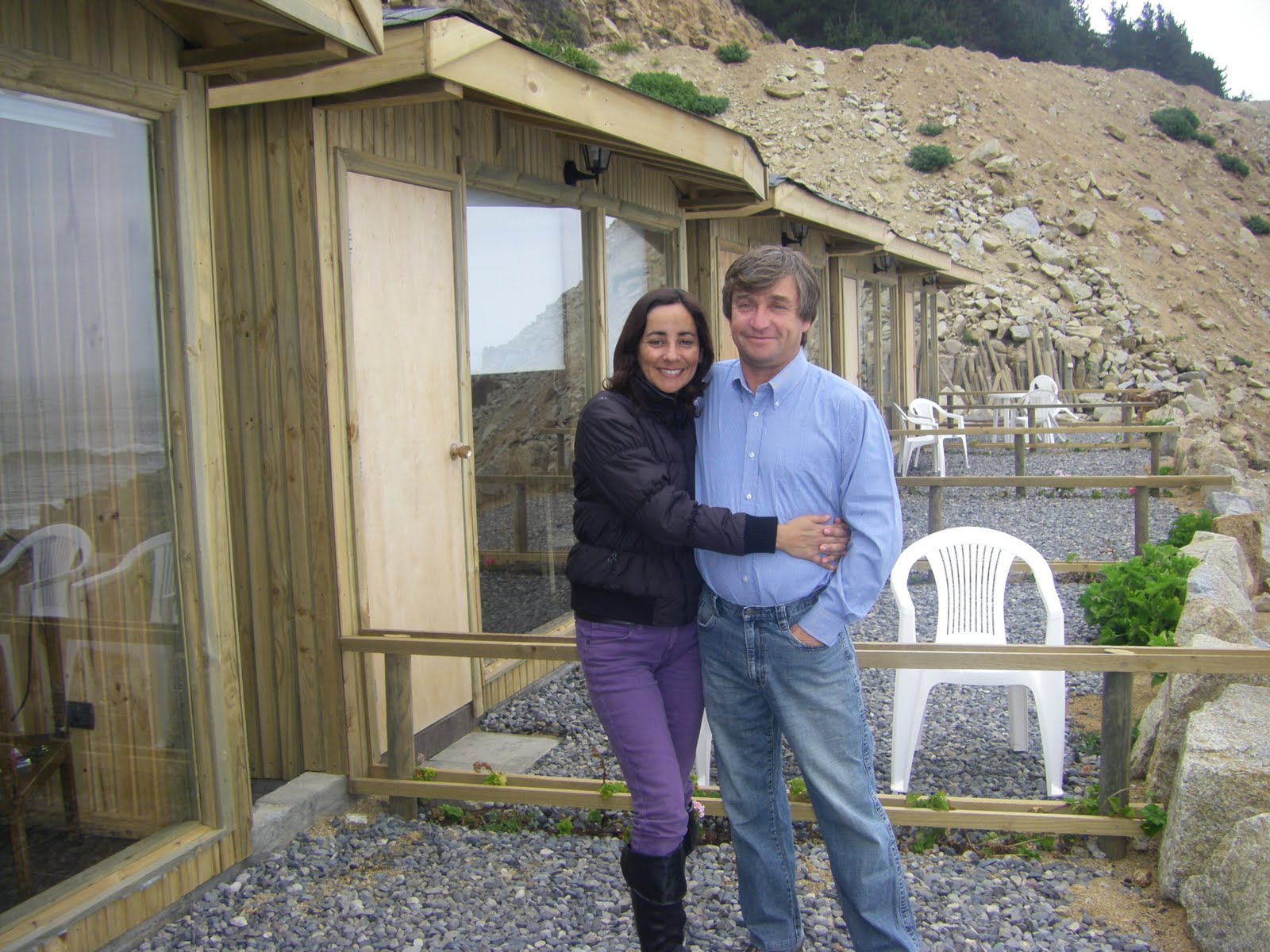
Bringing this historic encounter to a close, the 220 Volunteers joined Ambassador Fermandois in a loud “Viva Chile”, after which pictures were taken of the group with the Ambassador Fermandois. The event ended with repeated “Viva Chile” and even a verse or two of “Si Vas Para Chile”.

Later that same night, the ever resilient Chile 27/28 group of Hagers, Bakers, Gallegos, Joslyns, Mills, Bodinson, Dillehay, Wetterberg and Goldsmith dined on steak and crab cakes at the Historic Old Ebbits Grill in downtown Washington DC, and as you all may have already guessed, before heading home we toasted the Peace Corps, Chile, and our friendship repeatedly with way too much award-winning Chilean tinto.

Posted on October 1, 2011, in Leesburg, Virginia

Wednesday, May 4, 2011

Viva El Instituto Forestal!!

Tomorrow, May 5, 2011, in Santiago, Chile, there will be an event to commemorate the 50th Anniversary of the founding of the Instituto Forestal, the Chilean government’s forests, forest products, and forest industries research center. 1961, as it turns out, was truly a year filled with optimism and “Big Ideas”. Visionary Chileans created the Instituto Forestal that year, and an equally progressive US President established the Peace Corps. Both institutions and the many fine people who have worked within these organizations have made transformational changes to our world, providing noteworthy benefits to the fine people of both countries.

During the 1960s, several very fortunate young foresters from the United States were chosen to participate in both enterprises, and were sent to Chile as Peace Corps Volunteers to work along side Chilean professionals at the Instituto Forestal. I was one of those fortunate few, whose lives were changed by that experience. We established intimate friendships that have lasted to this day. We contributed our small part to the growth of Chile’s forestry and wood products sectors, and consequently we share with our Chilean friends and colleagues a sense of deep pride that this sector has now become a mainstay in Chile’s vibrant economy. We have not always kept in contact with the Chileans with whom we lived and worked during those heady years of our youth, but because of our experience at the Instituto Forestal we have rejoiced in Chile’s successes, and suffered along at least in spirit during the difficult years.

For me, the Instituto Forestal occupies a special place because it was while I was working there that I first saw Ximena (now my partner of 41 years), in a photograph shown me by my colleague at the time, Joaquin (now married to Ximena’s sister Veronica). In fact, it was not just that picture, but the undercover work of Ximena’s aunt, Silvia, who worked in the library at the Instituto Forestal, that determined that Ximena’s and my path should converge.

The work I did at the Instituto Forestal as a Peace Corps Volunteer on ways to preserve Chilean wood for use in construction not only led to more and better research at the Instituto itself, but also served as the basic research for my Master of Science Degree at the State University of New York College of Environmental Sciences and Forestry after Ximena and I returned to the US in 1970.

For many Peace Corps Volunteers, our time at the Instituto Forestal, under the memorable guiding hand of Don Manuel Munoz, together with Don Mario Han, Don Moises Yudelevich, and Don Manuel Ortiz, was one of the best times of our lives. For this, and for the many fond memories of time we spent in Chile’s forests, laboratories, training centers and green and white “Instituto” vehicles travelling the spectacularly beautiful roads of Chile, we all join our Chilean colleagues today in celebrating the 50-year Anniversary of the Instituto Forestal.

Viva el bosque Chileno!
Viva el Instituto Forestal!
Viva Chile!

Written on May 4, 2011, in Leesburg, Virginia.

Tuesday, April 26, 2011

One Year After; Personal Observations of Recovery in Maule.

“We are never satisfied with a response to a disaster, because it is, after all, a disaster”.*

To retrace the route I took alone about a year ago, the day before the earthquake, Gerry and I left Dichato, drove inland a bit through Coelemu and Quirihue, and then headed north along the coast through Cobquecura, Buchupureo, Curanipe, and Pelluhue. Curanipe and Pelluhue, especially the areas right along the coastal road, are pretty much cleaned up of the mountains of debris left by the disaster. But permanent rebuilding of homes and stores is very, very slow. The area just on the outskirts of Pelluhue, called Mariscadero, where the fishermen and poor families lived, is still a desolate landscape, where very little progress has been made to resettle the area. Rebuilding is not being encouraged in the lowest areas, so anyone who chooses to rebuild in an area declared tsunami-prone will not benefit from bank loans or insurance, making it impossible for most people to rebuild in these areas. It will take many years for these towns to be anything other than disaster zones. Recovery is very, very slow.

We had to push on to Chanco, where we were going to meet up with my brother-in-law, Joaco, who along with his wife, Veronica, have a very special home that sits on a sand dune bluff overlooking the fishing village of Loanco, and the “Faro Carranza” (Lighthouse). We spent some time in Chanco, a rural town which had retained that classical Chilean colonial architecture of one-story, thick adobe-walled buildings all painted in earth colors, with tile roofs and beautiful courtyards within which chickens, horses, even cows and lots of dogs roamed pretty much unattended. But every time I have visited Chanco since the earthquake, and this time was no exception, more of these picturesque homes and stores have been demolished, with empty lots in their place waiting for some sort of structure to be put in the space.
I commented to Gerry when we entered the town that I thought that in 3 to 5 years this town would be back to some semblance of the old “look”, but probably with construction of bricks, cement, and wood, rather than adobe, but designed to give the feeling of the historical look. We talked about it a bit, but the situation of Chanco had made Gerry almost despondent and much less optimistic than I. He believes that this small town that once had a certain distinct and attractive architectural personality, in 3 to 5 years will be nothing more than a mish-mash of whatever types of structures people could throw together, some nice, some not so nice, but no underlying personality. I fear Gerry may be right. This part of Maule is extremely poor, and does not receive much attention from its own regional leaders, much less from Santiago.

We left Chanco and soon approached my favorite spot on the Central Chilean coast, the small fishing village of Loanco. This is where Dago and Maria had their restaurant, right on the edge of the pounding Pacific Ocean, and where about a dozen families reside to fish for “corvina”, “congrio” and recently mostly “merluza”, all delicious fish. Loanco is amazing; in it’s small, isolated way. In the year since the tsunami wiped out most of the boats, vehicles, and houses along the water, the fisherman have new boats and motors, and two new tractors to pull their boats out of the water.
They are slowly rebuilding their homes, and Dago and Maria’s restaurant, “La Roca”, is running at full speed, totally rebuilt smack in the same location where it was wiped out by a wave of water a year earlier.

Bigger and better, their building is nicer, the kitchen is newer, and the bathrooms are cleaner. The food is about the same. Not fantastic, just plain good. We stopped at the restaurant to say hello to Maria, who was still there at about 6 PM, and let her know we would be coming to “la Roca” for dinner at about 8. We then went up the road a bit and through the pastures across the tops of the dunes to reach Joaco’s place. Joaco was there, getting everything ready for us, so we immediately opened a bottle of Joaco’s brother-in-law’s best cabernet sauvignon wine, produced at the “Estrella” vineyard and winery he owns and manages several kilometers outside of Cauquenes. We had brought along some spicy Chilean “chorizo” laced with “merquen”, some creamy slightly aged “Chanco” cheese (most of which is no longer made in Chanco), and some freshly baked “pan amasado”, so we sat on the porch enjoying the panoramic sunset over the five-kilometer-long shoreline, and the Loanco fishing village, with the Faro Carranza in the background. We explained to Joaco what we had seen and heard the two prior days during our visits to Concepcion, Arauco, and Dichato and talked about the progress many are making to rebuild their lives. However, we had to admit we were pretty stunned by how much still remains to be done.


Then we went to “La Roca” for dinner. Joaco and I had “corvina a la plancha” (sautéed sea bass), and Gerry had “Congrio frito” (fried Kingclip, or conger eel). We washed it down with a simple bottle of Missiones de Rengo Sauvignon Blanc, a good, everyday dry wine found easily throughout the US and often served in social events in Chile, like weddings, receptions, and group dinners. It is a very good value, and when paired with Maria’s fresh fish at “La Roca’, contributed to a top notch meal. As we left La Roca, Joaco offered to show us the new fisherman’s building that was recently built where the old fish cleaning and equipment storage area used to stand.

This new establishment is really quite an accomplishment. If you check one of my earlier blog postings about Loanco, you will be reminded that several months ago there was an announcement that 5 or 6 functional but attractive buildings were being designed by a group of university architects, to be built in fishing villages along the Maule coast, establishing “La Ruta de Las Caletas” (The route of fishing Villages, copying the already successful “Rutas del Vino”, wine routes, throughout Chile). I recall being very skeptical that this project was ever going to materialize, but to my astonishment, and great satisfaction, the one in Loanco is already finished, and we had a tour of it that night after dinner. It remains to be seen if the restaurant included in the project to serve not just fishermen but also the public, will prosper, and if it does, will it draw clientele away from the two other restaurants in town, including Dago and Maria’s “La Roca”. But this new attractive structure is surely a source of pride for the town, for the fishermen and their families, and deserves high praise. “La Ruta de Las Caletas” may after all become a reality, keeping an important promise made to the poor fishermen in these villages immediately after the disaster a year ago.

Again Gerry, Joaco and I settled onto on the front porch of Joaco’s ocean-view home, and finished the evening off drinking a single malt scotch we had also brought along in our “traveler’s tool kit”, smoking small Cuban cigars Gerry finally released from the inside pocket of his jacket after much coaxing, but mostly absorbing the incessant thunder of the breaking surf on the shore below. Sleeping at Joaco’s place overlooking Loanco and the Faro Carranza is always a dream, be it because I always arrive there exhausted by the day’s activities, or from the Maule wine we always share on his porch, or the glass of scotch that often follows, or just the lulling sound of the surf, but sleep here is always profound and uninterrupted, and this night was no exception. We needed the rest after a day we began much earlier in Arauco.

We arose the next morning to a typical Chilean breakfast: sliced ham, fresh “quesillo”, toasted “pan amasado”, wild blackberry jam, and a hot cup of instant Nescafe with milk. I don’t know what it is about the instant Nescafe in Chile, but it is delicious. Maybe it is the small container woven out of “mimbre” that the can is presented in, or the fond memories of those breakfasts shared in southern Chile with my colleagues at the Instituto Forestal when I first explored southern Chile as a Peace Corps Volunteer, that makes the coffee taste so good. However, I have always suspected that Chilean Nescafe has something else besides coffee in it, maybe ground garbanzos, I don’t know for sure, but it would not surprise me if it was really a special mixture found only in Chile. It doesn’t seem to taste near as good anywhere else.

Anyway, we finished breakfast, and returned to Loanco to observe the arrival of the fishing boats after their all-night, or early morning fishing. To our surprise and their great satisfaction, the boats were arriving loaded with fish. The fishermen told us this had not been common over the past year, but that maybe, just maybe, the fish have returned after a year of very bad fishing in the waters especially affected by the tsunami.
Hopefully the fish are back and this type of take will last, but on this day everyone was very excited about the number of large “corvina” and “congrio colorado” they had caught. They even had a few of the flat-shaped “lenguado”, my favorite Chilean fish that over the past few years has become very dear, and very expensive now in Santiago restaurants. I like it best when Ximena lightly sautés fresh filets of “lenguado” in a bit of browned butter and chopped fresh parsley, and serves it with a bit of steamed broccoli, all splashed with fresh lemon juice and a pinch of black pepper. Oh yes, and a glass of Veramonte Sauvignon Blanc from the Casablanca Valley (screw top notwithstanding). But back to our visit to Maule.

Gerry and I had to get back to Santiago by the evening, but we still wanted to visit Constitucion, possibly the town most extensively affected by the 2010 earthquake and tsunami. Going through Los Pellines, the next fishing village going north from Loanco, we observed that they, too, were offloading a good catch of fish that day from several new boats with shining new motors. We also observed, from a distance, that their new “Ruta de Las Caletas” structure was also almost done and ready to serve the fishermen and visitors to the village.

Constitucion has been, since the CELCO pulp mill was built right smack on the town’s beautiful beach on the edge of town (but effectively right in town) in the early 1970s, an unattractive place that, in spite of the pervasive poverty in the area and the sickening smell of the pulping process still attracts tourists in the summer to its beaches and riverside. In fact, it was a group of unfortunate vacationers who lost their lives in the tsunami because they were camping on an island in the middle of the Maule river when the wall of water rushed up the river and over into the streets of downtown Constitucion. It is not obvious how Constitucion is going to lift itself up from this disaster. Attempts to expropriate the properties most susceptible along the river, so that homes are not rebuilt in those vulnerable areas have been met by strong civil opposition. Constitucion is also receiving a “Ruta de Las Caletas” pavilion, and we observed the progress they are making with that structure, but a model home, erected to announce the style of new subsidized housing being offered to people left homeless over a year ago, sits alone in the empty expanse that once was a vibrant albeit precarious and relatively rustic vacation spot.
Maybe there will be a “wave” of rebuilding in Constitucion, but it was not evident to us on the day we visited this unfortunate town.

We drove along the beach road, past the stretch where there used to be several typical seafood restaurants, but where everything had been washed away in the tsunami. When I visited here in September of 2010, just seven months after the disaster, there was no rebuilding yet, and it looked to me like there was not going to be any. However, I was pleasantly surprised to see several rebuilt restaurants, hastily put up probably to attend to the past summer’s visitors who habitually go to Constitucion from Talca and Curico, to spend the summer. We drove further down the road that hugs the shore for about three kilometers south of Constitucion, ending at a small port facility. About halfway down this road is where, the year prior to the earthquake, my friend Flick and I spent a night in one of “Willy” and Javiera’s cabins that sit right on the rocks a few meters above sea level. When I returned here last September,
the property was barren, only the outline of the swimming pool distinguishable from the road above where I stopped my car and observed the devastation. But now, these young entrepreneurs have begun in earnest to rebuild their vacation business, “bigger and better” than before, Guillermo confidently boasts.
They are living in two of the cabins themselves, until their new home can be built on the site, and have a half dozen cabins finished and equipped, receiving visitor full time now.
They have big plans for a full restaurant on the site where their home was before, so guests do not have to drive all the way back into Constitucion for a meal, problematic especially in the dark on foggy nights common on this part of the Chilean coast. I must admit, I admire Willy’s and Javiera’s tenacity. In a few short months they will have rebuilt a very attractive place where travelers can spend one or two nights, on the rocky ledge right above where the breakers crash. Oh yes, in case you wondered, Javiera did mention that they have constructed a foot path straight out the back of the property, and up the hill where in a very quick few minutes anyone staying or living here can get to safe, high ground, should there be another tsunami like the last one. On the morning of the earthquake, Guillermo and Javiera gathered up their children, several guests sleeping in the cabins, and some valuables, and escaped the scene in several jeeps, up a road that leads away from the shore and up to higher ground. Their description of what they saw when they returned to the place where their home sat just an hour earlier, does not make a very convincing endorsement for spending a night or two in their cabins. But the spectacular seascape you have from the veranda of each cabin, or even from the beds if you open the curtains wide enough, is unparalleled. For many, it will be well worth the risk. Even Gerry claims he is going to return there with Maria Elena and spend a couple of days enjoying the scene. I’m not sure about that though. (Gerry after all is the guy who spent several nights sleeping in his car instead of his 8th floor apartment in Santiago, traumatized by the continual shaking that went on after the big quake!).

But it was time for us to leave the suffering coastal towns of Bio Bio and Maule, and return inland along the Maule River to join the Pan-American Highway at San Javier. I have developed a deep attraction to these friendly, hard working, mostly poor coastal people, and each time I visit my respect deepens for the way they face their plight.

A year before, the earthquake had destroyed much of Chile’s historical colonial buildings, especially those built of “adobe”. And prior to that, each seismic event over the years, and each period of civil strife have progressively destroyed historical monuments like churches, municipal offices, hacienda homesteads, and even some whole small villages (like Lolol and Chanco). The loss of important pieces of Chile’s heritage was great this time also. One old, beautiful building which was damaged this time was the main house of the Casa Silva vineyard and winery, used before the earthquake as an elegant Bed and Breakfast (or more like an Inn, I would say). When we stopped here right after the earthquake, we were told the owners could not repair the stately building, and were instead going to build a new hotel out near the polo field where they have a nice restaurant amidst the vineyards. Then, a few months later, we heard that, no, they were going to refurbish the old home, and open the Hotel again before the end of 2010. So Gerry and I decided we needed to check this out. Just off the Pan-American Highway near San Fernando, the Casa Silva estate is a rambling establishment of whitewashed adobe buildings, mostly storage barns, surrounded by perfectly groomed vineyards with the main house nestled in the middle of it all. True to what we had been told, there were guests, and the place was humming with activity, horseback rides in the vineyards, riding lessons at the polo field, wine tasting at the sales room, and precisely the day we visited, the beginning of the harvest of the Carmenere grapes that have become so popular in Chile and throughout the world. We sat at a small table at the polo field, lunched on a salad of mixed greens and fresh goat cheese, and washed it down with a glass of their Sauvignon blanc they have named “Dona Dominga”. So Casa Silva appears to be back in business just a year after the quake.

The setting at Casa Silva is truly idyllic. Of course it is this way because hard working entrepreneurs, who also have access to healthy amounts of financial resources, have invested their sweat and their treasury into creating one of Chile’s finest agribusinesses. In just three days, Gerry and I had seen and talked with many hardworking Chileans who were, in their own way, trying to remake their lives, improve the prospects for their children, and rebuild their communities. Some had access to resources, some had only their own hard work and ingenuity to rely on. But all of them show incredible resilience in the f ace of extreme loss afflicted just one year ago, and they exhibit optimism about the future I’m not sure I would be able to conjure up were I to have suffered what they did. But they are also still Chilean, and they are going to continue to be openly critical and demanding of their leaders, and rightfully so. It is not too much to ask that everyone, especially the movers and shakers who work and live disproportionately concentrated in Santiago, expand special efforts to speed up and strengthen the rebuilding of the towns and villages in Bio Bio and Maule, that were so devastated on February 27, 2011.

*MaryCatherine Arbour; Harvard Medical School.

Written in Leesburg, Virginia, on April 30, 2011.